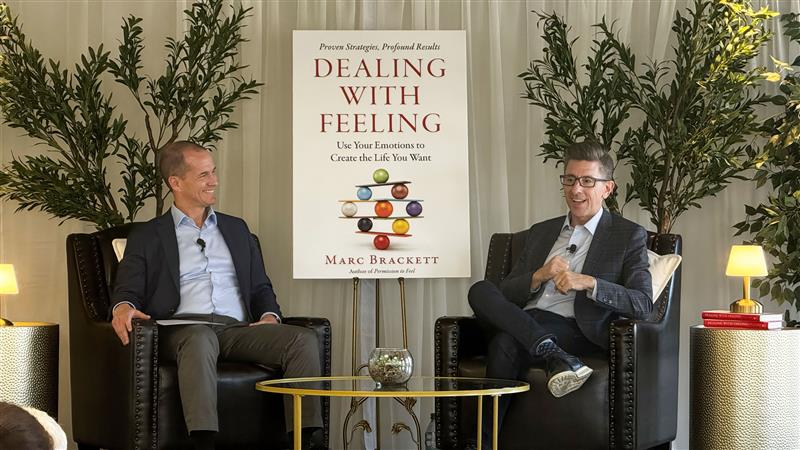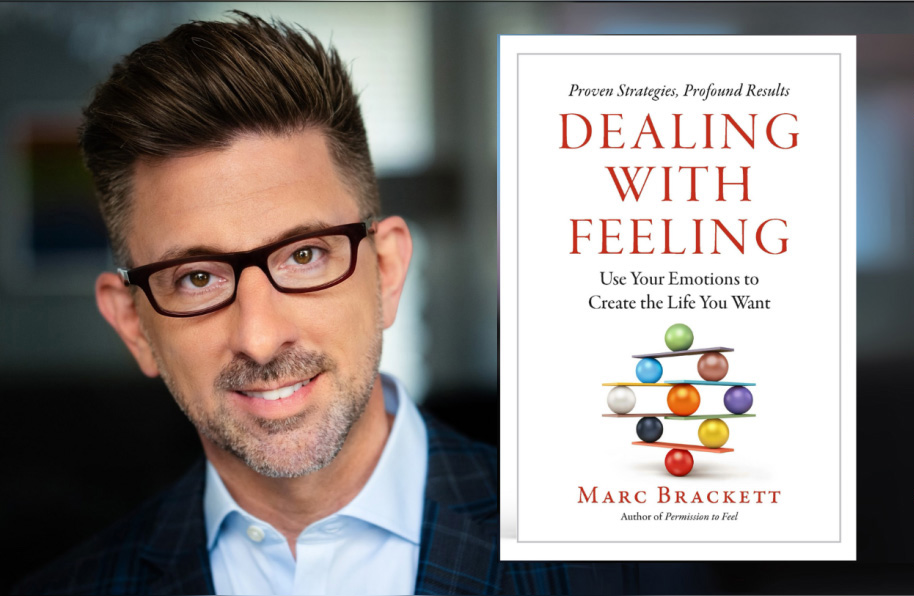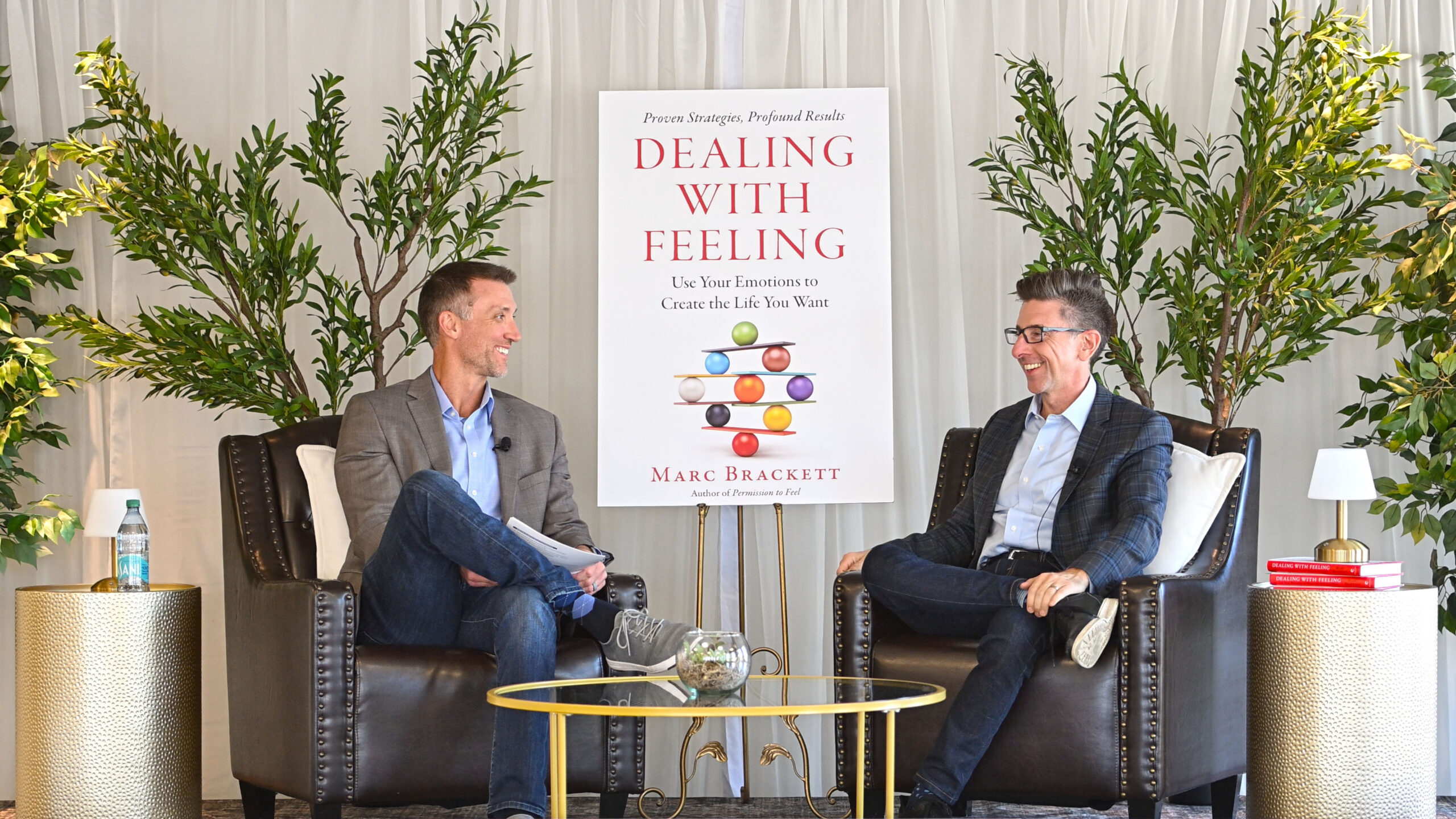

Well, welcome, everybody, to today’s conversation. My name is Brian Edwards with Swank Motion Pictures, and I have to say that I’ve been really looking forward to this conversation for a long time now, mainly because I’m joined by Doctor. Mark Brackett, who is the founding director for the Yale Center for Emotional Intelligence. That’s great. Mark, we’re excited to have you here. Appreciate you coming. Of this was actually facilitated in part due to the American Association of School Librarians Conference, which is down the street here in St. Louis, Missouri this weekend. Yeah. Thanks for joining. Mark, I’ve got I’ve got a whole page of background information that I could I could read off here introducing you and your resume and your twenty five plus years in this space and an expert in emotional intelligence and best selling author, which I want to get into to talking about your book a little bit. Your your creation and implementation of the ruler method as a curriculum for social emotional learning in schools. But I thought maybe best to hear it directly directly from you that people would love to hear from you, your background and kind of where you get your passion and direction for on emotional intelligence? Sure. Well, that’s a big question. So we got how many hours? As long as you want. There you go. Well, obviously, my day job is I’m a professor at Yale and I run the Center for Emotional Intelligence. And I’ve been doing that now for about about twenty five years. The center is about thirty five people. We’re half scientists and half practitioners. And so we do rigorous research on emotions and emotional intelligence and big studies on why this matters and what it predicts about people’s lives, which is all good things. And then we have this ruler model or approach to social emotional learning that’s now in about five thousand schools across the United States and other countries where we teach the skills of emotional intelligence to preschoolers, elementary schoolers, middle schoolers, high schoolers and even, you know, older adults. That’s great. So how did you get how did you get started in emotional intelligence? What’s your what’s your kind of starting point that really spurred you along into this space versus others? Well, you know, I had a pretty tough childhood. I don’t look like someone who had a tough childhood, but unfortunately, I had a lot of bullying when I was a kid. I actually hated school. I also had, unfortunately, other kinds of abuse when I was a kid. And I never talked about it. I suppressed it. I denied it. I did not do well in school. I always knew I was pretty smart, but I just could not do well. My brain was kind of all over the place. I was stressed out worrying about my safety versus, you know, caring about learning. But I was blessed because my mother had a brother who was a middle school teacher who happened to be writing a curriculum to teach kids about emotions through social studies, which is kind of magical. Yeah, he happened to be going for his graduate degree near my hometown, and one summer he stayed with us for a couple of weeks. And we were sitting in the backyard, and he was the first adult to ever just say, Hey, Mark, how are feeling? And I said, Not so great. And we just really had these open conversations about emotions. And then he wasn’t like, Toughen up, kiddo, or I can’t handle this. He said, Let’s figure this out. And that completely transformed my life. And so fast forward, I’m at twelve years old, I’m in college, I’m thinking about my career. And I have this epiphany that I want to take my Uncle Marvin’s curriculum and really build it out. And so I decided to get my Ph. D. In psychology and study emotional intelligence. And I pulled him out of retirement and we worked on a curriculum. And then that’s now about twenty five, thirty years ago. And you’ve it’s interesting in all the work that we do with schools and the trajectory of adoption of social emotional learning seems to have really taken off. Yeah. Over the last five to seven years. I mean, I think a lot of people look at the pandemic as maybe a turning point of emotional health, mental health in schools as perhaps maybe the catalyst for more focus in this area or more curriculum. But it also seems still a bit disjointed across the country. And I’m curious your thoughts on if that timeline aligns with what you’ve seen, but then also what you are seeing in schools and districts related to more adoption of emotional health curriculums or at least dedicated approaches to these sorts of things? Yeah, I think it’s like a lot going on in the field right now. You know, we’re trying to clean up our definitions of the work. We’re trying to make sure it’s implemented with the highest possible quality and really make sure that people know what it is and what it’s not. And there’s some confusion that like this is therapy in the classroom. It’s like, no, teachers are not therapists. Teachers teach skills like writing skills, language skills, math skills. They can teach kids emotion skills. They can help kids build a good vocabulary to describe their feelings. They can help kids problem solve about conflicts and what are the best strategies to manage the conflict. And that’s really our focus is really teaching very specific skills. And it’s developmental. Like how I dealt with anger as a kindergartner is really different than as a middle schooler or a high schooler. And so we want to make sure this is supporting kids throughout their development. The other thing I’ll just say is that I think people don’t understand the emotion system. People think, oh, like you’re born that way or it’s your temperament or your personality. And it’s not. These are real skills that have to be learned and practiced and refined over the course of our development. And I always argue that there are five big reasons. First is attention memory learning. How you’re feeling right now, just so you know, is driving your attention. If you’re like, this guy’s boring, your brain is already like, what am I doing for dinner tonight? But, you know, I you know, we’re trying I’m trying to make this emotionally engaging and that’s going to create presence. So a teacher who understands emotions and how they drive learning will shift emotions in that classroom to create more engagement. The second is decision making, that how we feel just drives the way we see things and judge things. The third is relationships. Let me ask you a question. Have you ever worked with somebody? I know we’re at your workplace right now who has not been really skilled at dealing with their feelings. Yes. I mean, to be honest with you, I think at least some of the folks that work around here would probably point to me as one that’s that’s not necessarily as fully equipped in dealing with feelings or emotions as much as probably I should stress your little like hard to follow or you get if you get really annoyed at somebody, you kind of make weird facial expressions. So my point of that is that emotions drive the quality of our relationships. Like if you were sitting with me right now like this, kind of like, like really? I’m immediately disengaged. I immediately think this guy’s got a power thing going on or he’s not interested in my work. So emotions are the drivers of our relationships. The fourth is physical and mental health. And I don’t think any educator would argue with me at this point that we do have an anxiety crisis, a depression crisis. The research is pretty clear that kids are more stressed out than they’ve ever been. And if we don’t help them manage stress, they’re not going to be the best possible learners. And then final, the big final one is performance. And so I’m very interested in, for example, highly creative people. We study creative people. And I always used to think that, again, you’re just like it just happens. But here’s what I’ve learned. Your emotions are driving the creative process. But it’s your emotional intelligence that determines whether or not that process becomes a real product. Because if you can’t deal with the disappointment, the frustration, the feedback, whatever it is on that journey to achieving your goal, you’re probably not going to achieve the goal. So, I’m curious. So, we’ll have a lot of teachers that are that are listening in or watching this later on. And as a teacher, from a teacher’s perspective, teachers are oftentimes tasked with having conversations on emotional intelligence. They’re tasked with kind of managing some sort of framework on social emotional learning. There’s not a lot of formal curriculum out there that districts have significantly adopted across the board. As a teacher, I’m being asked to talk about something that perhaps is not the foundation of my training. It’s not necessarily within my expertize. A lot of these kind of tools and concepts that you that you surface, teachers may not be equipped to handle those conversations appropriately, especially within the balance of the framework that you describe. How would you tell teachers that they can kind of get started within this and improve upon or what tools can they use to better manage those conversations and make more impact upon their students is that’s really what they’re striving for. Yeah, that’s a good question. And I think I’m just going to push back on it a little bit and say that we have to shift the mindset that the teacher is the knower and the teacher is the fixer or problem solver for the kid. So my research shows that that’s not what kids want. They don’t want the teacher to say do this or do that. They want teachers to be present. They want teachers to be not judging them. They want teachers who are good listeners and they want teachers who can show their empathy and compassion. Never do we hear kids say things, I want the teacher to fix my problems or, you know, tell me what to do with my feelings. Nobody wants to be told to do with their feelings. How does it feel if I say, you know, I need you to calm down? Doesn’t that feel great? I will say that my eight year old daughter does not react to that well when I express that to her. Or honey, I need you to focus. And that’s an important thing, though, because I think there’s this over the fear of doing the work in the classroom is that you think you have to know so much to be able to do it well. And really, you don’t have to know that much. You just have to create the conditions for kids to feel comfortable talking about it and then help them find the strategies that work best for them. So you do have to have background knowledge. I learned this the hard way cause I wrote a curriculum for elementary and middle school first, and it didn’t get implemented well because there was all these mindsets that the adults had about the perfect thing they had to do. Or some people even said, you know, I never really dealt with my own anxiety. I don’t want to even bring it up in my classroom. And so then we worked on teacher professional development and we had more success. And then I would go to schools. This is, you know, sorry, principals, for what I’m about to say. But teachers would come up to me and say things, you know, well, we’ve been told we can’t really start implementing your curriculum until after the state tests. And I’m like, well, I’m doing this professional development in August and like your state tests are in May. And what a time to be more capable for managing emotions and anxiety than the state testing. Exactly. So, I realized that leaders didn’t understand it. They didn’t see the value proposition of the work. So then we built training for leaders. And then we decided, you know what, we’re going to go for the whole school model. We’re going to train superintendents and all district level people. We’re going to train building level principals and heads of school. We’re going to train the teachers and even families. And so that way, what happens is that you have a common language. So, you know, from my work, we have a tool that’s called the mood meter. And this is four quadrants, yellow, red, blue and green. The yellow quadrant means high energy, happy feelings, like excited and hopeful and optimistic. The green is calm, content, tranquil, peaceful. The blue is sad, down, lonely, disappointed. And then the red is the anxiety and the anger family. So there’s a mood meter. We teach people lots of words to describe their feelings. And so you as a parent or the principal or the five year old in kindergarten or the superintendent or the school board member, everybody knows what a mood meter is. And it really helps to have that common language to talk about emotions. And that’s a big part of the work that I do. So connecting this a little bit to what we do here at Swank Motion Pictures and Swank K-twelve, which is which is really for schools facilitation of access to movies and video resources specific to instruction. I want to dive into you’ve created some some really helpful discussion guides that are wrapped around movies that that are available actually now through our streaming platform, but that actually lay out a lot of this framework specific to film and the use of film in kind of communication with students about emotional health and emotional intelligence. Do you mind talking through a little bit of why movies can be such a valuable part of the learning process of social emotional health? Yeah. Well, I think it’s just like why books are. It’s like books, movies, you know, they’re engaging, they’re storytelling and using film to help kids learn about emotions can be a beautiful experience because characters have emotions and characters make mistakes and movie characters, you know, are sitting home alone and feeling left out and lonely, and we’re observing that. And some of us may relate to that even as a person who’s watching it. And so the question is, how do you kind of embellish that and show those clips and have really rich conversations? Well, if you were that character, you know, how would you have felt? Would you have felt the same way? What do you think that character was feeling? How do you what do you think about how that character managed that feeling of disappointment? Would you did you think that that was a helpful strategy they used to manage their anger or unhelpful? Oh, it’s unhelpful. Why was it unhelpful? Because, you know, they yelled and screamed and then less people wanted to be around them. Oh, Okay. So given that you don’t think their way of dealing with it was helpful, imagine you were the best friend of that kid and knew what they were going through and how they behaved. What’s three things you’d recommend to them? What advice would you give that person to better manage the anger or the disappointment? And so I feel like that’s the magic of this, which is that there’s beginning, there’s middle, there’s ends, there’s characters that go all different directions. It’s an emotional roller coaster ride in almost every movie. And just using that as an opportunity to get kids to reflect on the characters and then reflect on themselves and then learn the skills through that process can be really helpful. And these discussion guides do a fantastic job of kind of working their way through all of that. The I mean, the breaking down the kind of moments from within the film. Yeah, feedback loop or the questions or the prompts that a teacher can leverage with their students to kind of spark those conversations. I’m curious as an educator, how do you go about recommending where to get started? How do you how do you choose films that would be inclusive into an appropriate level of discussion for students on social emotional learning? Inside Out or Inside Out, too, from our perspective, is We see that as the top film that’s that’s forever used. It’s so obvious with all of the emotions and the characters within that and evaluating those. But we see a lot of use outside of an inside out outside of just movies that are really specifically built around emotions and how to manage them appropriately. As a teacher, where do I get started? How do I how do I find an appropriate film that aligns with this in a really meaningful way? Well, I think the movies that you referred to are kind of the obvious, right? Because it’s about emotion and every character represents a feeling, etcetera, etcetera, etcetera. One early childhood, one adolescence. And that’s great. But I almost feel like ideally you’re going to use films with real characters experiencing real world experiences. You know, you take a film like The Outsiders and it’s like the whole thing is feeling. Yeah. There’s there’s disagreement between groups. There’s there’s loss in the family. There’s so much going on in these films. So I would look for films that really are authentic in demonstrating the full range of emotion that that are engaging. And so kids are going to want to watch them and they’re, you know, they present opportunities to have those deep conversations. To me, it’s all about like the rich conversation where you can not only do like a whole group exercise, but you can have kids break out into groups and role play. So role play is another great way to do it. Imagine you’re this character and you’re that character. Let’s role play a better solution. So they got into a fight and ended up really hurting each other and not speaking to each other anymore. Imagine your best friend and you were those two characters in the film. How could you have a new ending to the story? How does that apply to? You know, we were talking earlier that that oftentimes the assumption, at least based on the feedback we receive, is that a lot of the work on social emotional learning is done at the elementary level or the middle school level. And there’s this kind of assumption that maybe by the time kids are reaching their high school years, that at least from a curriculum perspective, there’s not nearly as much of a focus on it. How do you respond to that and how does that journey continue throughout either education or even throughout life outside of school? Well, I mean, think about it. I mean, all of us. I mean, I’m in my fifties now, just to let you know. You’re supposed say, really? Really? Thank you. A little delayed, but it’s alright. I’ll go problem solve that with somebody else later. Later. But the, you know, what I’m dealing with as a leader of a center of fifty, you know, thirty five employees, I’m dealing with the same emotions that I had, you know, overwhelmed when I was in middle school or high school, but now overwhelmed for me at my age is very different. And so you just think about that with kids. The transition from like preschool to kindergarten stressful for many kids. You’ve to make friends. You have to be without mommy or daddy. And then you got middle school where there’s puberty and it’s like my reputation. And, you know, I have to really fit in. And if I don’t fit in, like life stinks. And then there’s high school, which is like, all right, what am I going to what am I interested in? What am I sports life like? What are my extracurriculars like? Do I date? Do I not date? Am I allowed to date? Am I not allowed to date? Do I go the direction of trying things out that may not be best for my health and decision making or not? And so, I mean, adolescence is just a perfect place for this because it’s some people call it the age of opportunity. And I agree with that. The in our high school work, what we do very specifically is we help kids engage in what we call prospection. I never was asked when I was in ninth grade, do you want your high school career to be like? That was not part of my education. Well, in our work on SEL, we do that. What do you want your experience to be for these four years, or even just for ninth grade? What about your friendships? What about your well-being? What about your academics? What about sports or extracurriculars? Like, let’s set some goals for these things. And then let’s see what strategies that you need to achieve those goals. And then when things get in the way, you know, when your grit doesn’t work, you know, or you get the feedback that you’re not looking for. How do you manage that anxiety or that stress or that overwhelm to continuously achieve your goals? So I see, you know, as a college professor, I can tell you right now, my own students have very limited vocabularies. And these are Yale undergraduates. And you would expect, oh my gosh, they have perfect SAT scores and grades. I give you an example. So with vocabulary, simple vocabulary, how are you feeling? I’m stressed. Come on, really? You’re stressed? I mean, I have empathy, but I didn’t really believe it. What do you have? And so I had them journal about all the things that were making them stressed. And then we looked at those, that content analysis, I’ll call it, and what were the themes related to stress? Well, stress is when you have too many demands and not enough resources. That’s real stress. None of them said that. What they all said was, your father is richer than my father. Your mother is more connected than my mother. You study for fewer hours and get better grades. You’ve got this, you’ve got that. It was all social comparison. They were calling that stress. Well, in my emotional intelligence dictionary, I call that envy. And so I then had a really rich conversation with my students about envy reduction. And so managing stress, if you take stuff off your plate or you get help. I don’t know anything else. You can breathe, but it’s not it’s still going to be there. But for envy, if you’re sitting there endlessly making comparisons, which is a huge issue right now in society, given social media and other things, was teaching them maybe have a little gratitude, maybe instead of focusing on what everybody else has, why not take a moment and think about what you have and be grateful for it? But they had never been taught that. They didn’t really know how they were feeling. So they’re going to treatments for stress reduction when it’s really envy reduction. And that’s college students who are, you know, some of the brightest kids in the world do not have an emotional vocabulary. So when people say like, I’m not sure this is right for high school students, I said, like, you have no idea how important it is for them to develop those skills because we don’t want them to be suffering in college. You know, it’s a development process. Do you find that students are engaging in these conversations or do you find you have to kind of work through a little bit of the rhetorical nature that they assume the question is right? How are you doing today? How are you feeling today? Oh, I’m good. You know what I mean? And how do you how do you kind of work through that barrier? Well, they take my course and then they get mad at me. You know, they think that like it’s funny you say that because most students come to my class thinking they’re going to memorize my theory, you know, or memorize the correlation coefficient between X and Y, and then they’re going get that’s going to be the test item. I’m like, just to let you know, this is an experiential course. Like, you got to, like, your feelings throughout this course and see what’s working for you, what’s working not for you in terms of your life. I’m not interested in that. You know, how are you going to grade that? I’m like, don’t worry about the grade. Worry about learning the skills. I, you know, I, Professor Breckett, I don’t have time to learn these skills, I have to get perfect test scores so I can go to graduate school. Now I teach graduate students, teach medical students, I teach law students. I bring this up in those classes, oh, I can’t deal with this right now. I got to wait till my residency or I get my private practice. And everybody’s prolonging the development of the social emotional skills. And then we’re in our thirties and forties and we’re like, you know, not so healthy. So I see this as a process from preschool until, you know, an organization like Swank. I would push for you can apply these principles and skills to every meeting here to make it more productive and have people feel more seen and heard. Well, we appreciate your time and being here today. I realize you’re extremely busy. And again, I want to get to your new book that’s coming out and I understand you’re on a bit of a book tour. And thank you also for putting together these fantastic lesson guides. There’s there’s Mark has broken these down by elementary, middle, high school tied specifically to individual movies. But we’ve also got some tools in some ways that from within the streaming platform that we offer, we actually have an AI based search that is that is built in a way that is intended to allow for some additional context that can tie into some of these guides that you’ve created. It’s built to allow for some of the identification of some additional movies from within the library as teachers are looking to branch outside of this. But overall, the breakdown that you’ve provided, I think, is one that is really core and fantastic for teachers to really get started in this. If they don’t have something like the ruler method at their school or at their district, they’re allowed to or they’re enabled to take this on as a part of their courses. You mentioned the outsiders. It’s obviously a fantastic English language arts book and film. But also wrapping that around the emotional intelligence piece is really intriguing. And I think everything that you’ve put together here is fantastic in helping teachers to do so. Breaking it down by various timestamps from within the movie, teachers can create these bookmarks from within our streaming platform that will actually follow along with exactly what you’ve created to allow for some efficiencies in their implementation. So I really appreciate you building these out for us. Of course. Tell me a little bit about your book that just recently came out in the last few months, Just this last month, actually. Excited to say it was an immediate national bestseller. So, that was fun to Congratulations. And delighted to be here to talk about it today. The book really came out of my observation during the pandemic that people really could not deal with their feelings, including myself. I’m like, Mark, you’re one of the world’s experts in emotional intelligence. I’m like, whatever, you know, like this is not easy. It became a whole new world on emotional health. And you talk about, you know, oftentimes, you know, women are more interested in emotions and emotional intelligence than men. If it’s tied to leadership, they’ll be interested in it. But in terms of like emotional awareness, not so much. But during the pandemic, I can’t tell you how many men email me saying like, I finally realize how important your work is. You know, I’m now my kid’s tech coordinator. I’m working from home. I got to babysit. I got to do this. This is hard work and I’m having a lot of feelings. So I struggled with my own emotion regulation. I noticed thousands of people struggling. And so I started doing research on what did people really want to learn to better regulate their feelings. And that’s what the whole book is about. So it’s in my argument is that there’s three big reasons that we need this book right now. The first is kind of the twenty fourseven news cycle. We’re just bombarded and bombarded with stuff. And it’s maybe it’s real, maybe it’s not real. It’s hard to know anymore. And we just get overwhelmed by what’s happening. The second is, you know, the world has become tougher for many of us with the pandemic and with wars that are happening, with economic uncertainties. It’s stressful. And the third is, unfortunately, there’s just a lot more aggression in our society than ever before. And people need strategies to deal. And what I realized is that there are real research based strategies that everybody can learn that no one is born with to regulate your emotions. It starts with shifting your mindsets like, actually, I can regulate. Yeah, you can. Just so you really can. You may not want to, but you can. Everybody can do it. The second is you got to build the vocabulary, as I shared. We say you got to name it to tame it. So if you think you’re stressed, but you’re actually envious, you’re probably going to choose the wrong strategy. The third is you got to know how to deactivate your nervous system. You got to be able to breathe and be still. Our brains are so all over the place. I mean, the number one complaint that teachers tell me they’re experiencing is everybody’s distracted. People are not present. And I can’t keep up with the instruction because I can’t keep up with the dopamine hits. And you got to practice. We got to train our brains to just be still for a little bit. It’s hard. Then you have to learn how to shift your thinking when you start getting into that. Well, let me ask you, do you ever have any negative self talk? I try and limit it. There’s you know, you mentioned gratitude earlier. I really try and be mindful and grateful for the things that I have. So, I try to really push that back. I think if there’s one area of emotional health that I feel like I’m stronger at, I think it would be that one. But it happens to everyone. I’d be lying if I said it didn’t If you’re with your kid and you like get really frustrated with your kid or you might like walk to your room, I can’t take it anymore. This is ridiculous. You know, that kind of stuff. Patience is my challenge. So, yes, I’ve been there and maybe I’m framing this not in the fully disclosed light that I should be. Sorry, I won’t push it. But we all you know, people often say things like they have their self critics. You know, I could have done better and I’m not smart enough or I’m not, you know, I’m such an idiot if I make a mistake. That’s never helpful. And so how do you have more self compassionate talk? That’s a big piece of it. The next one is about relationships. For example, for kids, I have a mantra, which is a child should never worry alone. It’s not why. Like, why do you have to figure it out on yourself by yourself? It doesn’t make any sense. Firstly, the nervous system is not even ready to do that by itself. The brain is not even developed enough. Kids need support. They need someone to guide them and give them perspective and show that they care. That alone is a regulation strategy. Then the big one is about physical activity and nutrition and sleep, all related to your healthy regulation. And then I end the book saying, imagine a world where you identify as someone who is really skilled at dealing with their feelings, what would be different? And I got that idea actually from a guy at the gym, a fitness instructor. He’s like, you know what? Because I’m a my other career is I’m a martial arts instructor. Don’t think I knew that about you. Yeah. I got a fifth degree black belt, so you better look at it. But I’ve never been like a guy to pump iron. And I decided when I turned fifty, like if I’m going to age well, I’m going to have to work out more, not just do like kicking and punching and, you know, stuff like that, but like really build muscle mass. And I don’t like it. I didn’t like it then. I’m like, I’m fifty years old. Why am I doing deadlifts? You know, like this is ridiculous. But then I got really into it. And now I it’s been like four, five years of like four days a week at the gym lifting weights. I will only stay in hotels when I travel that have gyms. And I really see myself as someone who works out. And it’s completely transformed my motivation to work out. I want to apply that to our emotional health. I want people to literally look in the mirror and say, am an emotionally healthy person. I am someone who can deal with anything that comes at me. So that’s my goal for the book. Well, that’s a lot of discipline for traveling on the road and getting workouts. And that frequently is somebody who travels a fair amount. I miss out on what I would like to be working out. So, so good for you. And congratulations on the book. Thank you. There’s I’m sure everybody can get it anywhere you Any bookstore. Any bookstore, anywhere you can buy books. If you were looking for more information on the discussion guides that Mark Brackett has created specifically related to the use of movies and film as a part of teaching social emotional learning, go ahead and feel free to contact Swank Motion Pictures. These are also available through our stream platform. We partner with all of the major movie studios and a hundred of other studios out there to provide a library of films for schools and for teachers to use as a part of their instruction. This can all be used in support of learning, which is the overall I know you’re very busy. Thank you, Mark. Really appreciate you stopping by and hanging out with us for a day. My pleasure. Thank you.