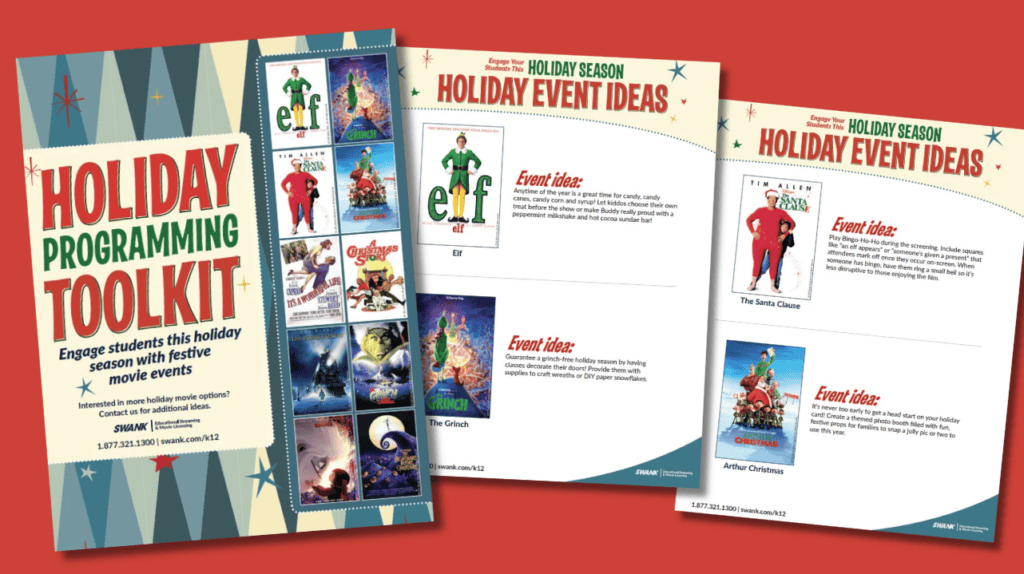
Holiday Movie Events for Schools
To help schools plan memorable seasonal programs, we've created a Holiday Programming Toolkit filled with holiday movie recommendations, activity ideas and event inspiration designed specifically for K-12 schools.
Teaching Guides
Hispanic Heritage Month, observed Sept. 15 through Oct. 15, gives schools an opportunity to explore the histories, cultures and contributions of Hispanic and Latino communities in ways students can see, discuss and remember.
Film can help make those connections tangible. In the classroom, teachers can use movies, documentaries and educational series to build background knowledge, strengthen analysis and introduce perspectives connected to curriculum. Below, find our top ideas for incorporating video into lessons for Hispanic Heritage Month:

Lesson Idea: After viewing a selected scene, students identify a tradition represented in the film, then compare it with a tradition from their own family or community. Younger students can respond through drawing while older elementary students can write a short reflection.

Lesson Idea: Have students analyze a selected scene for what it reveals about a character’s community, opportunities and challenges. Students can cite visual and dialogue evidence, then discuss how context influences choices.

Lesson Idea: Ask students to examine how one film represents Hispanic or Latinx identity. What perspectives are centered? What assumptions are challenged? Students can compare the film with a primary source, article or historical account and evaluate how medium shapes understanding.
Swank Educational Streaming helps educators connect video content to purposeful instruction. Teachers can find curriculum-connected content, focus students on specific moments with custom segments, add notes and assign viewing to extend learning beyond class time. These tools support the kind of intentional video use schools increasingly value, from discussion and analysis to literacy and cultural understanding.
Want more lesson ideas? The Swank Educational Streaming platform includes lesson guides and key scene resources for top Hispanic Heritage content, including “Selena,” “Encanto” and more. Get a demo today to see how streaming can impact your classroom.
Hispanic Heritage Month can also create a natural reason to bring students and families together. A licensed movie event gives schools a familiar format that can expand with simple cultural and community-building elements.
Because family movie nights are public performances, schools need licensing for these events. Swank provides year-round coverage for planned and unplanned movie showings on school grounds, helping schools move forward with legal confidence.
See all posts
To help schools plan memorable seasonal programs, we've created a Holiday Programming Toolkit filled with holiday movie recommendations, activity ideas and event inspiration designed specifically for K-12 schools.

A practical guide to teaching media literacy with film, including classroom questions, lesson ideas and tools that help educators move from viewing to analysis.

AI literacy is becoming part of what students need to navigate school, work and everyday life. These films and classroom ideas can help educators turn a fast-changing topic into focused discussion, analysis and critical thinking.
Join the schools and districts already using Swank to stream, teach, and screen with confidence.
Contact Us