How Shannon Miller Uses Video to Expand What’s Possible in the Classroom
Aug 17, 2026
By
Swank Motion Pictures
A district teacher librarian’s perspective on the impact of reliable video access across the curriculum.
At Van Meter Community School District in Iowa, Shannon McClintock Miller supports students and teachers from preschool through twelfth grade as the district teacher librarian. Her perspective also reaches far beyond her own district. As a Future Ready Librarians leader, author and national speaker, she works with educators across the country on how libraries can strengthen teaching and learning.
We talked with Shannon about how her district uses Swank Educational Streaming — and what changes when teachers have reliable access to video that supports instruction.
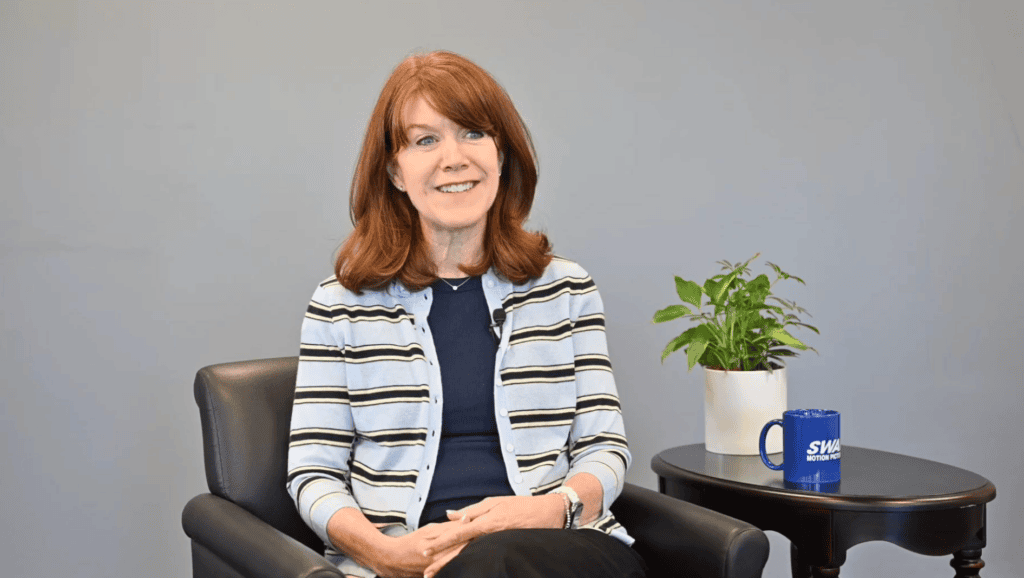
Swank Streaming is so much more than just movies because it is a way that we really hook the kids with the video that we’re showing. And so maybe it’s a little movie clip. You’re not showing, like, the whole movie, and you are using it as a hook in your teaching. I can go in and I can look for any topic or subject to be able to support what our teachers are doing. And I love that because I can find grade level. I can find different subject levels that I might be looking, for and being able to pull out those clips or pull out even, like, whole movie movie segments and be able to show those too, I think, is just so important to kind of become part of our collection and that toolbox again of what we’re using within our library and our classrooms. we really need a resource like this to take care of some of those needs of not being able to use video like we used to or having things that are blocked or, having our teachers not use the streaming platforms that they might, want to use that they bring from home and being able to protect also our teachers, but also protect us as a school district on the video content that we’re using. adding that layer of bringing, like, video, I think really enhances what we can bring to our classrooms and, to our kids through their teaching. And that that’s exciting to me because that’s something that, is fairly, new to us too, to be able to use so many different, like, movies and clips that we’re using. And so being part of that collaboration and conversation, I think, is so fun. We’ve loved bringing it to our district, and I know that you will love bringing it to your district too.
Getting students to lean in
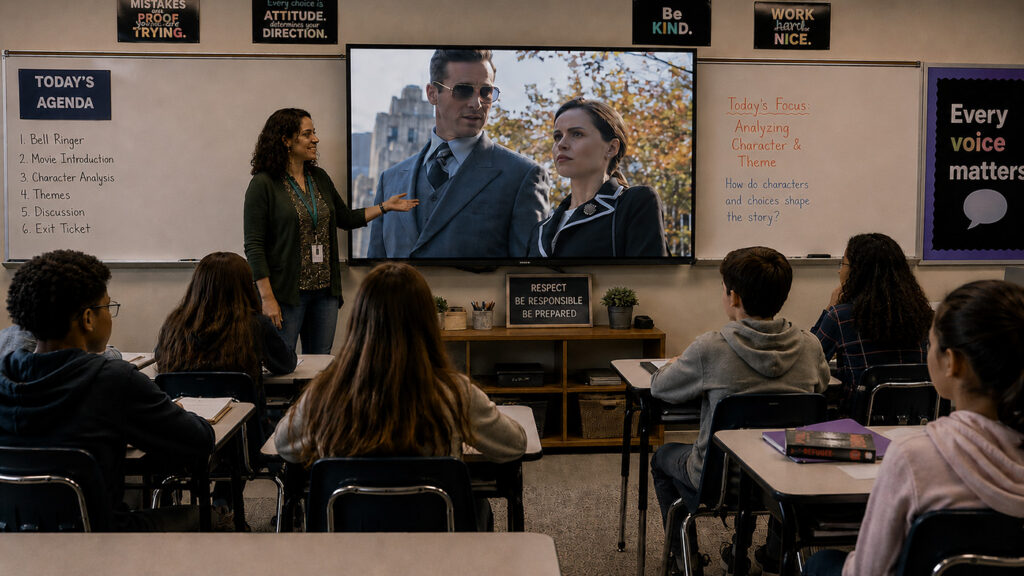
Her teachers plan video as intentionally as any other part of a lesson. They choose a scene or segment that introduces a key question, then use students’ reactions to guide discussion and connect back to the learning objective.
You’re not showing the whole movie. You are using it as a hook in your teaching.
The pattern holds across grades and subjects. A teacher poses a guiding question, shows a short excerpt, runs the discussion, and ties what students noticed back to the objective.
A scene from Earth has elementary students naming habitats and adaptations before the vocabulary is introduced. A passage from Words That Built America opens the Bill of Rights by asking what the speakers’ words reveal about the country’s founding ideals. In high school science, a segment introduces climate data and charts, then becomes a discussion about how to evaluate evidence.
The full film still has its place, whether it’s assigned for homework, used to close out a unit or shown as a celebration of a book a class just finished. But in day-to-day instruction, teachers can use shorter segments to introduce a topic, spark questions and lead into discussion.
A library that works across grades and subjects
For Shannon, the value starts with having one library broad enough to support what teachers are already teaching. From feature films and documentaries to educational series, the collection gives her options across a wide range of topics and grade levels.
I can go in and I can look for any topic or subject to be able to support what our teachers are doing.
That kind of range matters when one librarian is supporting every grade in the district. Instead of piecing together resources from different places, Shannon has one dependable source she can turn to when teachers need video that fits the curriculum.
The result is a resource teachers can build into instruction — using video to introduce ideas, reinforce learning or extend a lesson when it serves the objective.
Reliable access without the workarounds
There is a difference between finding a video and being able to show it. Shannon sees that distinction firsthand. Teachers still want to use video as part of instruction, but content can be blocked or unavailable when they need it. What they need is dependable access to the content they’ve planned around.
We really need a resource like this to take care of some of those needs of not being able to use video like we used to, or having things that are blocked.
That consistency gives teachers more confidence that the content they plan to use will be available when it is time to teach.
It also gives schools more control over the viewing experience. On ad-supported video sites, what a teacher selects may not be the only thing students see. Ads, recommendations, thumbnails, comments and autoplay can introduce content the teacher never chose or reviewed.
With a centralized video library, teachers have a dependable way to bring planned video into instruction, while schools and districts can manage access more consistently across classrooms.
More ways to support instruction
For Shannon, the value goes beyond giving teachers another place to find video. A broader collection gives her more to bring into planning conversations with educators — and more ways to help them connect content to what students are learning.
Adding that layer of bringing video really enhances what we can bring to our classrooms and to our kids through their teaching.
That makes video another point of collaboration between librarians and teachers. When educators are planning a unit, Shannon can help identify content that supports the lesson and gives students another way into the topic.
And for a district librarian who regularly collaborates with educators beyond her own schools, that is what makes a resource worth keeping in the instructional toolbox.
See what’s possible with a video library built for the classroom
Swank Educational Streaming combines curriculum-connected movies, documentaries and educational series with tools that help teachers find relevant content, create custom segments and assign viewing. See how the platform can save prep time, support purposeful video use and create stronger opportunities for discussion, analysis and understanding.
With Swank Educational Streaming’s library of more than 40,000 movies and TV shows, it’s never been easier to press “play” on learning. Check out some of the films educators across the country use as resources for enhancing a variety of lesson plans.
Webinar
Purpose-Built Movie Streaming for Schools: See the Difference
View our webinar to see how a platform built for K-12 schools not only solves the challenges of using movies in the classroom but also equips educators with tools to make film an effective part of instruction.
Downloadable Resources
Teaching Guide: How to Use Movies in the ELA Classroom
This resource helps English teachers use film to its fullest instructional potential in the classroom. Guide includes best practices to be applied before, during and after the screening, as well as concrete suggestions for employing films as part of lesson plans.
Legal. Licensed. Built for K-12.
Join the schools and districts already using Swank to stream, teach, and screen with confidence.