What Highly Engaged Classrooms Do Differently When It Comes to Video Use
Sep 22, 2026
By
Swank Motion Pictures
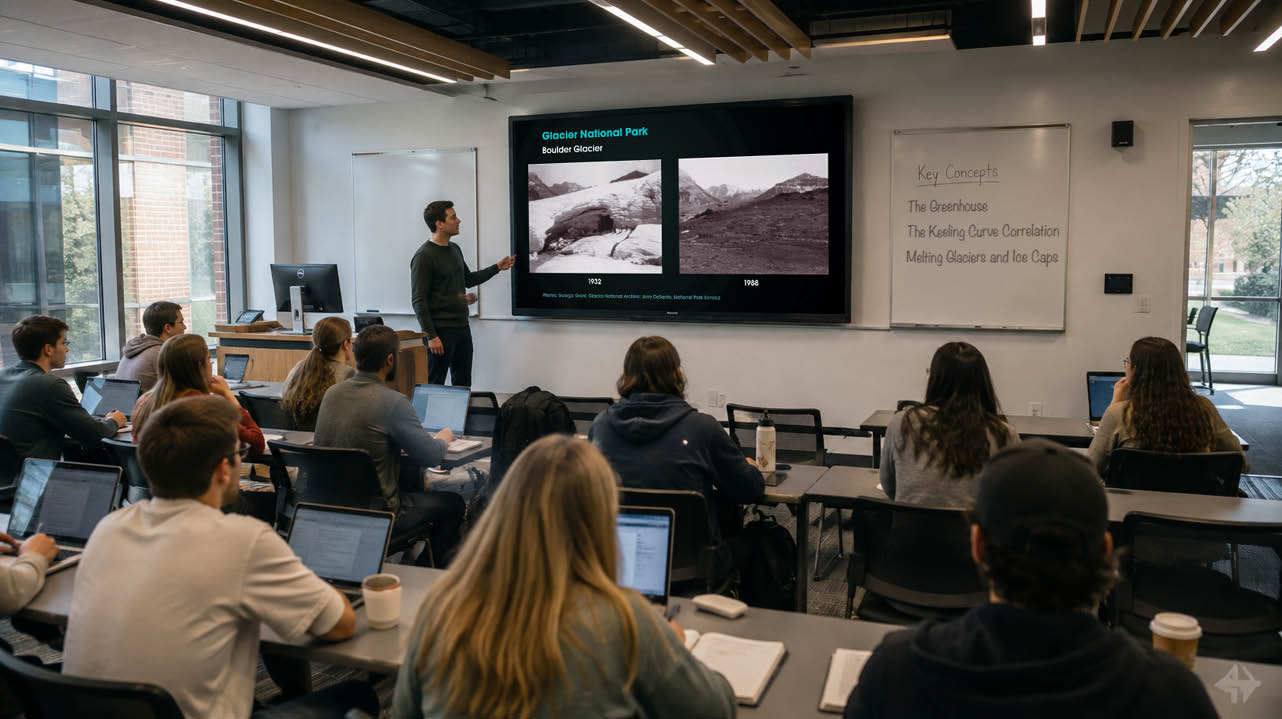
Video can be more than a classroom supplement. Used intentionally, it becomes a tool for discussion, literacy development, critical thinking and student engagement.
Engagement is not about keeping students busy. In high-engagement classrooms, students are asking questions, making connections, analyzing what they see and applying ideas in ways that make learning stick.
Video can play an important role in that kind of learning when it is used with purpose. A powerful scene, documentary segment or educational series can introduce a new concept, support literacy development, make abstract ideas more concrete and give students a shared point of reference for discussion.
The difference is intent. In the most effective classrooms, video is not treated as a break from instruction. It is integrated into instruction with clear goals, guided discussion and tools that help teachers focus every minute on learning.
The concept of narrative transportation, where individuals become deeply engaged in a story, is central to cinema’s educational potential.
Name Here
– Moore and Miller, 2020
What High-Engagement Classrooms Have in Common
Every classroom looks different, but high-engagement learning environments tend to share a few common practices. They use video content intentionally, connect it to the lesson and give students a reason to watch actively.
They start with a learning goal
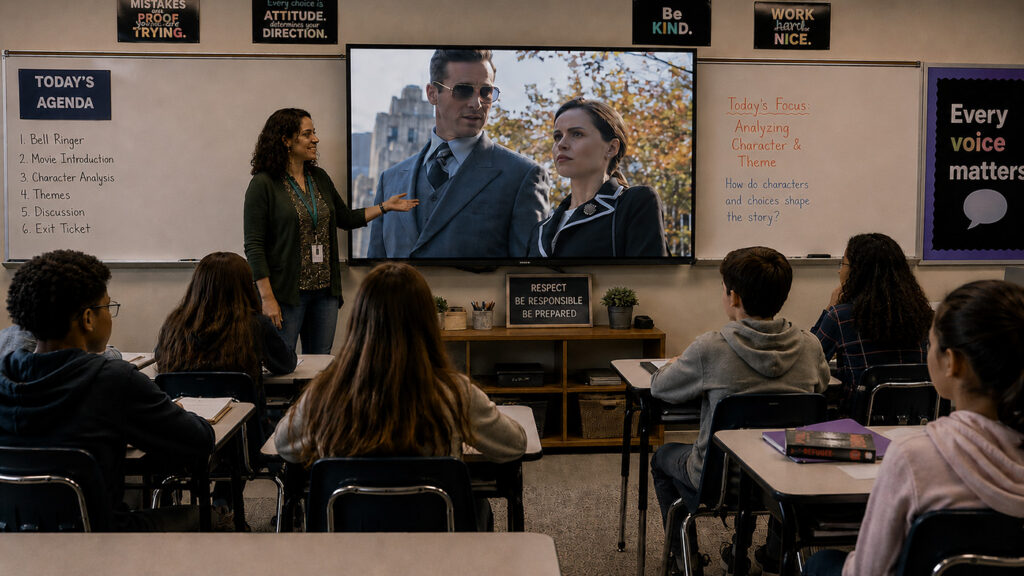
Teachers choose video content because it helps students understand a specific concept, question, theme or standard. A short film scene might introduce tone in an ELA lesson. A documentary segment might add historical context. An educational series might help students visualize a science concept that is difficult to explain with text alone.
They use video to invite discussion
High-engagement classrooms use video as a launch point for analysis, reflection and conversation. Students might compare a film adaptation to a text, evaluate a character’s choices, connect a historical event to current context or explain how visual evidence supports an idea.
Swank has greatly improved teachers’ use of movies with their instruction! Teachers pair videos with books, history lessons, science lessons and often in film classes. Without Swank, our jobs would be so much more difficult.
Christine Szeluga
Library Media Specialist, Cranford Board of Education
They protect class time
Purposeful video use does not require showing an entire film. Often, the strongest instructional moment comes from a focused scene or segment. When educators can pinpoint the exact moment a lesson calls for, video becomes easier to manage and more effective for students.
They make learning more accessible
Video can support different learning styles by combining visual storytelling, spoken language, music, emotion and context. That shared experience can help students enter a topic more confidently, especially when a concept feels unfamiliar, abstract or hard to connect to everyday life.
They keep instruction teacher-guided
Even when video content is engaging on its own, the teacher’s role matters. Strong classrooms use prompts, questions, reflection and follow-up activities to make viewing active. Students are not just consuming content. They are interpreting, comparing, questioning and connecting it back to the lesson.
Why This Matters at Back to School
The start of the school year is when teachers set expectations, build routines and begin shaping how students participate in learning. It is also the right time for schools to make sure educators know which instructional resources are available and how to use them effectively.
For administrators and technology leaders, this moment matters too. When video use is supported through an approved, education-focused solution, schools gain more consistency across classrooms while giving teachers resources that help strengthen instruction.
That structure is especially important as video continues to be part of how students learn. Research shows 88% of educators consider video essential to teaching today’s students and 94% report an increase in student performance when video is integrated effectively. Another study found that parents and teachers see video helping students review school topics, improve grades and build interest in subjects such as science.
How Swank Educational Streaming Supports Engaged Classrooms
Swank Educational Streaming is built to help schools turn video into an instructional advantage. The platform brings together a growing library of more than 50,000 movies, documentaries and educational series with tools designed for purposeful classroom use.
Educators can find curriculum-connected video content, identify scenes that align with their lesson goals, add instructional notes and assign focused viewing through an existing learning management system. With Swank’s AI tool, teachers can also explore standards- and curriculum-based suggestions, uncover relevant content and generate discussion questions that support the way they already teach.
For administrators, Swank Educational Streaming provides the structure schools need around content use. Role-based permissions, customizable content libraries and administrator visibility help schools support classroom video use with more oversight, consistency and confidence.
I’ve had a lot of teachers swoon with excitement about Bookmarks. They set the start and end point, add directions and send it to the kids. It’s been a game changer for our teachers.
Len Bryan
Partner of Library Services, Cherry Creek Schools
Beyond the Classroom: A Complete Approach to School Video Use.
Together, Swank Educational Streaming and Swank Movie Licensing give schools a more complete way to use video across campus, supporting purposeful instruction and confident schoolwide programming.
Make Every Minute on Screen Serve a Purpose.
See how Swank Educational Streaming can help your school support engaged learning with purpose-built video tools, curriculum-connected content and the confidence to use video across classrooms and beyond.
With Swank Educational Streaming’s library of more than 40,000 movies and TV shows, it’s never been easier to press “play” on learning. Check out some of the films educators across the country use as resources for enhancing a variety of lesson plans.
Webinar
Frame by Frame: A Smarter Way to Teach with Movies
Our Webinar “Frame by Frame: A Smarter Way to Teach with Movies” explores how our curriculum-connected streaming platform can support meaningful learning outcomes – all while making content access easier than before.
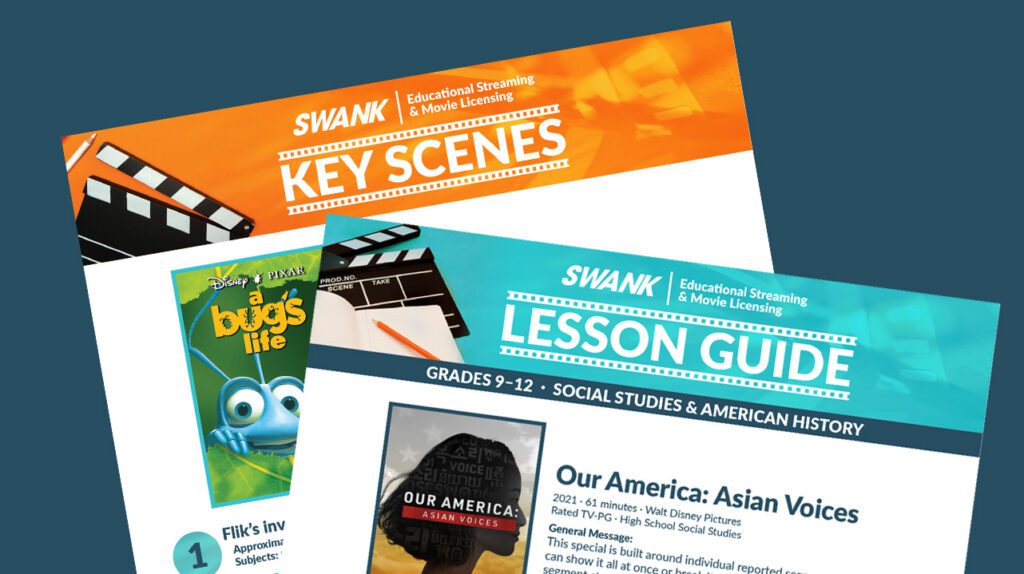
Lesson Guides & Key Scenes: New Instructional Resources for Teaching with Film
We’ve added two new guides to our instructional resource library: Key Scenes Guides and Lesson Guides. Here is what is in each one and how teachers are putting them to work.
Legal. Licensed. Built for K-12.
Join the schools and districts already using Swank to stream, teach, and screen with confidence.